Symbol Cluster Algorithms Powering Accumulative Wins Across Mobile Reel Platforms
Anna Lange · Aug 22, 2026

Symbol Cluster Algorithms Powering Accumulative Wins Across Mobile Reel Platforms
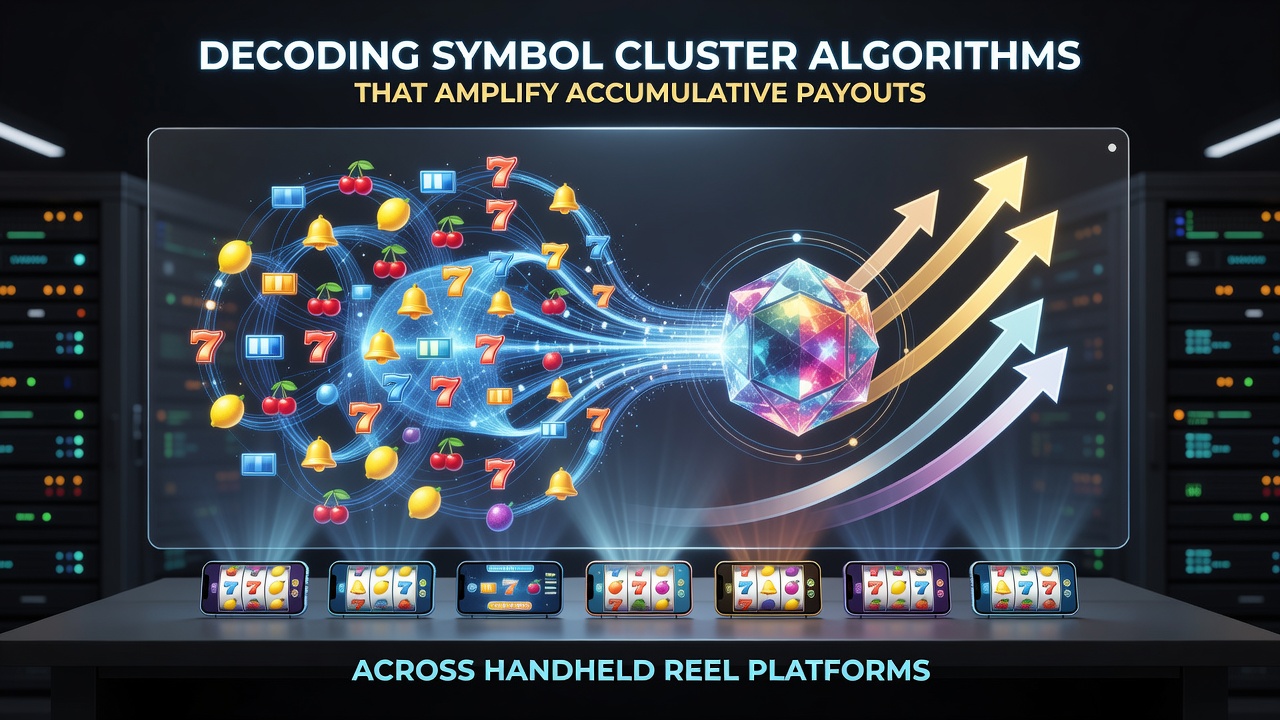
Symbol cluster systems have reshaped how payouts accumulate on handheld reel platforms since developers moved beyond fixed paylines, and these mechanics rely on specific algorithms that detect grouped symbols rather than linear matches. Clusters form when identical icons appear in connected blocks of three or more, triggering immediate evaluations that feed into accumulative reward structures, and mobile devices handle these calculations through optimized processing that maintains performance during extended sessions.
Core Detection Mechanisms in Cluster Algorithms
Algorithms scan the reel grid after each spin using adjacency rules that check horizontal, vertical, and sometimes diagonal connections, while random number generators determine initial symbol placement before the cluster check begins. Data from industry reports shows that cluster detection runs in milliseconds on handheld hardware, allowing seamless integration with features like cascading reels that remove winning symbols and drop new ones into place. This process repeats until no new clusters appear, building the accumulative total through successive evaluations.
Developers program these systems with weighted probability tables that influence how often larger clusters emerge, and observers note that mobile platforms often incorporate touch-responsive interfaces to highlight forming groups in real time. Research from the University of Nevada, Las Vegas Center for Gaming Research indicates that cluster-based titles contribute to extended play patterns because each cascade sequence can extend a single spin into multiple payout events without additional wagers.
Amplification Through Accumulative Features
Accumulative payouts grow when cluster algorithms feed results into layered multipliers or progressive pools that carry over across spins or sessions on the same device. Some implementations track persistent meters that increase with every cluster size above a threshold, creating upward pressure on potential returns as play continues. Handheld platforms benefit from cloud-synced data that preserves these accumulators even when users switch networks or close the application temporarily.
August 2026 saw several providers release updates to cluster detection routines that improved synchronization between mobile clients and backend servers, resulting in more stable accumulative tracking according to figures released by the New Jersey Division of Gaming Enforcement. These refinements reduced instances where partial clusters failed to register, and the changes aligned with broader industry efforts to standardize payout verification across portable devices.
Platform-Specific Optimizations for Handheld Devices
Mobile reel platforms require algorithms that balance visual complexity with battery efficiency, so cluster detection code often uses simplified adjacency matrices instead of full grid scans on lower-powered hardware. Yet these optimizations still deliver accurate payout calculations because developers test against regulatory benchmarks that mandate consistent random outcomes regardless of device type. People who study mobile gaming metrics find that cluster titles frequently report higher average session lengths compared with traditional line-based games, partly because the visual feedback from expanding groups encourages continued engagement.
Integration with device sensors allows some applications to adjust animation speeds based on gyroscope data, giving players a more responsive feel during cascade sequences. Industry organizations such as the Canadian Gaming Association have documented how these adaptations support regulatory compliance while preserving the core logic that drives accumulative growth. Handheld implementations also incorporate fallback routines that revert to server-side verification if local processing encounters interruptions from incoming calls or background applications.
Statistical Patterns and Performance Data
Performance data reveals that cluster algorithms produce payout distributions with heavier tails than fixed-line systems because large groups can trigger multipliers that compound rapidly. Studies compiled by the Australian Gambling Research Centre show that mobile users encounter these amplified outcomes at rates influenced by both game design and session duration, with accumulative features contributing to the upper end of reward ranges. Developers adjust symbol frequency tables accordingly to maintain target return-to-player percentages while still allowing for dramatic cluster events.
Those who analyze play logs across multiple handheld platforms observe that accumulative meters tied to cluster size often reset after a maximum threshold is reached, preventing indefinite growth and ensuring periodic resets that align with mathematical models. This structure keeps the experience balanced while still offering the potential for substantial single-session gains when clusters chain together repeatedly.
Conclusion
Symbol cluster algorithms continue to evolve as mobile hardware advances, and their role in amplifying accumulative payouts remains central to many handheld reel experiences. The combination of adjacency detection, cascade mechanics, and persistent reward tracking creates systems where each spin carries layered potential beyond initial results. Data from regulatory bodies and academic sources demonstrates consistent patterns in how these mechanics perform across devices, while platform-specific optimizations ensure reliable execution on portable hardware. Future refinements will likely focus on further reducing latency and enhancing synchronization without altering the fundamental probability structures that govern cluster formation and payout accumulation.