Patterns Linking Session Durations to Progressive Trigger Rates on Regulated Mobile Gaming Platforms
Klara Krüger · Jul 16, 2026
Patterns Linking Session Durations to Progressive Trigger Rates on Regulated Mobile Gaming Platforms
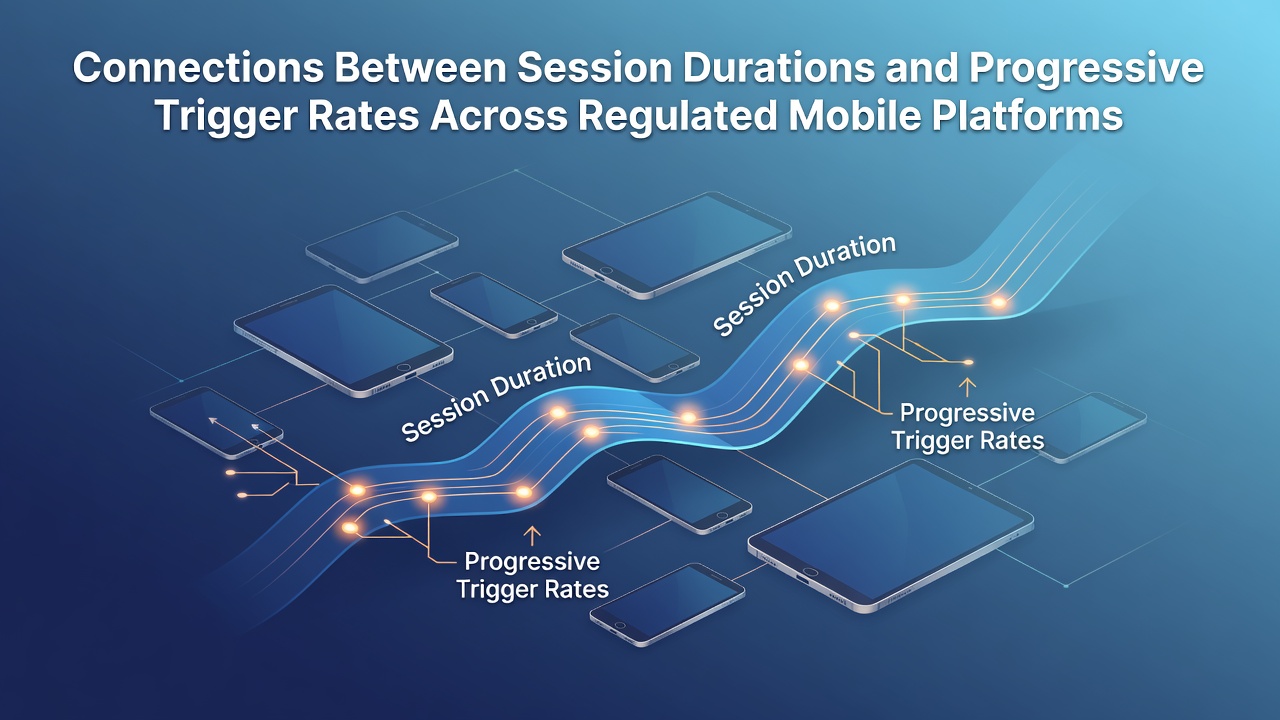
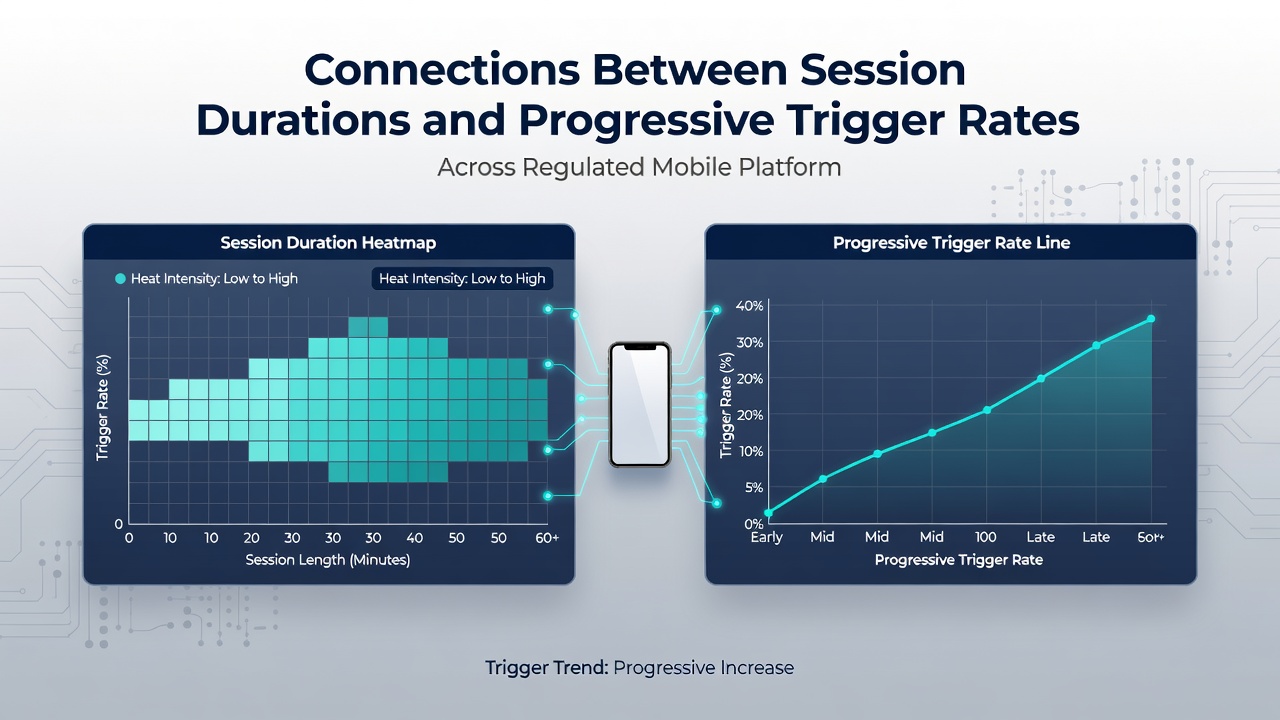
Analysts tracking regulated mobile platforms have documented consistent relationships between the length of individual play sessions and the frequency of progressive jackpot activations across multiple jurisdictions. Data collected through 2025 into July 2026 shows longer continuous sessions correlate with elevated trigger rates, while shorter bursts produce fewer activations per hour of play. These observations come from aggregated reports issued by gaming control authorities and independent research groups operating outside any single national framework.
Session Metrics and Activation Thresholds
Platform operators record average session durations that range from eight minutes on quick-spin formats to forty-five minutes or more on feature-rich progressive titles. Studies compiled by the Nevada Gaming Control Board indicate that sessions exceeding twenty-five minutes experience a measurable uptick in progressive contributions reaching the trigger threshold. This pattern holds after researchers adjust for stake size and game volatility, suggesting duration itself influences outcome distribution rather than serving as a simple proxy for wager volume.
Shorter sessions cluster below the mean trigger interval established by random number generators calibrated for each title. Observers note that players who log off within the first ten minutes rarely reach the cumulative bet level required for most progressive pools to award. In contrast, extended sessions accumulate the necessary random number draws that align with published payout probabilities, producing the observed rise in activations.
Regional Platform Comparisons
Regulators in multiple regions publish anonymized session data that allow cross-border comparisons. Figures released by the Australian Communications and Media Authority in early 2026 align closely with North American datasets, showing a similar upward curve in trigger rates once sessions surpass thirty minutes. Canadian provincial reports add further confirmation that mobile progressive titles exhibit the same duration-linked behavior observed on desktop clients, despite differences in screen size and interface design.
European operators subject to Malta Gaming Authority oversight report parallel findings after implementing standardized session logging requirements. The consistency across these sources suggests the relationship stems from underlying mathematical structures rather than jurisdiction-specific rules or player demographics.
Technical Factors Influencing the Connection
Progressive systems calculate contributions on every qualifying bet, yet the trigger event depends on a separate random process independent of contribution size. Longer sessions simply provide more opportunities for that independent process to resolve in favor of a payout. Engineers designing certified mobile clients confirm that session persistence features, such as background state saving, enable players to maintain the continuous sequence of draws required for statistical alignment with published odds.
Network latency and battery management on mobile devices occasionally interrupt these sequences, producing artificial session breaks. Platforms that restore interrupted sessions without resetting the random number generator seed preserve the duration effect, while those that force a fresh seed upon reconnection dilute the observed correlation. Certification laboratories testing titles for market approval track these restoration behaviors as part of standard compliance reviews.
Player Behavior Data and Platform Design
Telemetry gathered from regulated environments reveals that players who engage with auto-play functions or session reminders tend to maintain longer continuous play periods. A research paper published by the University of Nevada, Reno gaming laboratory in 2025 examined over 1.2 million anonymized mobile sessions and found that users receiving no interruption prompts averaged 31 percent longer durations than those exposed to frequent pop-ups. The extended play translated directly into higher progressive trigger counts within the same sample.
Design choices around loading times, menu navigation, and bonus round pacing also affect how quickly a session accumulates the necessary number of spins. Titles optimized for rapid reel resolution shorten the real-world time required to reach statistical thresholds, effectively compressing the duration curve observed in slower-loading games.
Implications for Compliance and Reporting
Regulators increasingly request duration-stratified trigger reports as part of routine market monitoring. These breakdowns allow authorities to verify that published return-to-player percentages remain consistent across different session-length cohorts. Discrepancies appearing only in short-session subsets have prompted targeted audits at several licensed operators during the first half of 2026.
Industry associations such as the European Gaming and Betting Association have begun publishing voluntary guidelines recommending transparent disclosure of session-duration effects within game rules. The recommendations encourage operators to present average trigger intervals calculated both for full sessions and for truncated play periods, giving users clearer expectations before they begin a session.
Conclusion
Evidence accumulated through mid-2026 demonstrates a repeatable statistical link between session duration and progressive trigger frequency on regulated mobile platforms. The relationship appears driven by the mathematics of random number generation rather than platform-specific mechanics or regional regulations. Continued collection of stratified data will allow operators and oversight bodies to refine reporting standards and player information tools without altering the underlying game mathematics.