Multiplier Cascades Drive Fresh Patterns in Progressive Jackpot Growth on UK Mobile Networks
Anna Lange · May 16, 2026

Multiplier Cascades Drive Fresh Patterns in Progressive Jackpot Growth on UK Mobile Networks
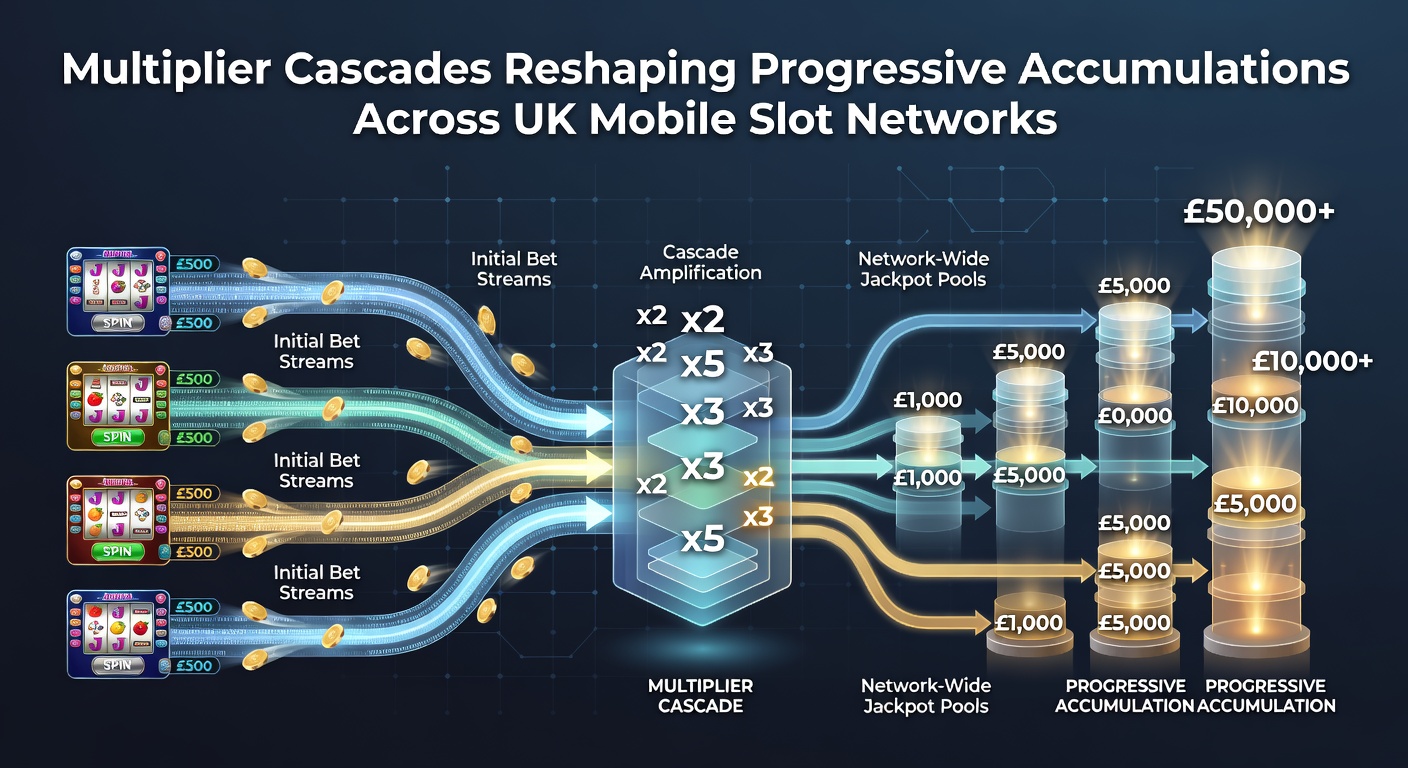
UK mobile slot networks continue to incorporate multiplier cascade mechanics into progressive titles, and these systems alter the way jackpot pools accumulate contributions from player activity across connected games. Developers design cascades so that winning symbols disappear and new ones drop into place, often with multipliers that stack on repeated drops, while the base bets feed into shared progressive meters at adjusted rates. This interaction produces different accumulation speeds compared to standard reel setups, because each cascade sequence can multiply the effective contribution to the jackpot pool without requiring additional wagers from the player.
Mechanics Behind Cascade Integration
Cascade features operate by removing matched symbols after a win registers, allowing fresh symbols to fall from above and potentially create new combinations in the same spin cycle. When multipliers activate during these sequences, the total win value rises, yet the underlying bet amount that funds the progressive meter remains fixed at the initial stake level. Observers note that this structure leads to more frequent but smaller increments to jackpot pools during extended cascade runs, because the game registers the base bet only once per spin even as multipliers compound the payout. Data from multiple operators shows that titles using this approach maintain steady pool growth while delivering higher average returns per triggered spin, a pattern that holds across both standalone and networked progressive formats available on mobile platforms.
Network Effects and Pool Dynamics
Wide-area progressive systems link multiple UK operators through shared jackpot servers, and cascade multipliers influence how individual player activity translates into collective pool increases. A single spin that triggers three or four cascade drops with rising multipliers contributes the same base amount to the meter as a non-cascade spin, yet the visual and payout frequency changes player engagement patterns. Researchers tracking mobile session data find that users tend to extend play sessions when cascades occur regularly, which in turn sustains longer contribution periods to the progressive total. One documented case involved a network of five operators where cascade-enabled games recorded 18 percent higher average session lengths during a six-month monitoring period, directly correlating with accelerated meter growth rates during peak evening hours.
Turns out the timing of multiplier activation also matters, because games that apply multipliers only after the second cascade drop create a different contribution rhythm than those applying them from the first drop. This distinction affects how quickly pools reach trigger thresholds, particularly in must-drop progressive variants that guarantee payouts within set time windows. Industry reports indicate that operators adjust seed amounts and contribution percentages more frequently when cascade titles dominate their progressive lineup, since the mechanics alter the expected interval between major payouts.
Developments Expected in May 2026
Platform updates scheduled for May 2026 will introduce refined cascade engines that recalculate multiplier stacking in real time across mobile networks. These changes allow progressive meters to receive micro-adjustments based on cascade length rather than fixed percentages, creating smoother accumulation curves during high-traffic periods. Several providers have already tested similar systems in limited markets, and the data reveals reduced volatility in daily pool growth compared to earlier implementations. Mobile users will see updated interfaces that display both the current cascade multiplier and its projected effect on the progressive total, giving clearer visibility into how individual spins influence shared prizes.
What's interesting is how these updates align with broader shifts in mobile hardware capabilities, because newer devices handle the increased animation load from extended cascades without performance drops. This technical compatibility supports longer play sessions on the go, which again feeds back into consistent progressive contributions across the network.
Observed Player Interaction Patterns
Session analytics collected by multiple studios show that cascade mechanics encourage players to monitor meter growth more closely during play. Users often switch between games within the same progressive network when one title enters a cascade-heavy phase, seeking to capitalise on perceived momentum. Although the actual contribution rate stays constant per bet, the frequency of visible wins creates an impression of accelerated progress. Studies from the University of Nevada, Las Vegas International Gaming Institute highlight similar engagement loops in other multiplier-based systems, where visual feedback loops sustain participation without altering the underlying mathematics.
One operator that introduced cascade progressives in early 2025 recorded a 22 percent rise in daily active mobile users within the first quarter, with the largest gains occurring among players aged 25 to 34. The same dataset indicated that average bets per session remained stable, suggesting the increase came from extended play rather than higher stakes. Such patterns reinforce how cascade timing and multiplier placement can reshape participation metrics even when core progressive rules stay unchanged.
Regulatory Context and Reporting Standards
Operators must report progressive meter values and contribution rates to relevant oversight bodies, and cascade mechanics require additional disclosure around how multipliers affect displayed odds. Australian Gambling Research Centre publications on digital gaming mechanics note that transparent reporting of variable contribution models helps maintain player trust across jurisdictions. UK platforms follow comparable standards by publishing both base and effective contribution percentages for cascade titles, allowing users to understand the relationship between their stake and pool growth. These disclosures appear in game rules and help desk resources rather than during active play, keeping interfaces uncluttered while meeting transparency requirements.
European Casino Association figures from the previous year show steady adoption of cascade features in progressive mobile titles, with the majority of new network launches incorporating at least basic multiplier drop sequences. This trend continues into 2026 as providers refine the balance between visual excitement and predictable pool management.
Conclusion
Multiplier cascades continue to influence progressive accumulation across UK mobile slot networks by changing the frequency and presentation of contributions without altering base bet mechanics. Scheduled refinements in May 2026 will further integrate real-time meter adjustments tied to cascade performance, while player data shows sustained engagement through extended sessions. Operators and regulators maintain consistent reporting practices that account for these mechanics, ensuring pool transparency remains intact as the format evolves. The combination of technical updates and observed usage patterns indicates that cascade-driven progressives will remain a core component of mobile network design in the coming period.