Bonus Layers and Random Triggers: Mapping How Incentives Shape Access to Cumulative Prizes in Portable Reel Designs
Klara Krüger · Jun 30, 2026

Bonus Layers and Random Triggers: Mapping How Incentives Shape Access to Cumulative Prizes in Portable Reel Designs
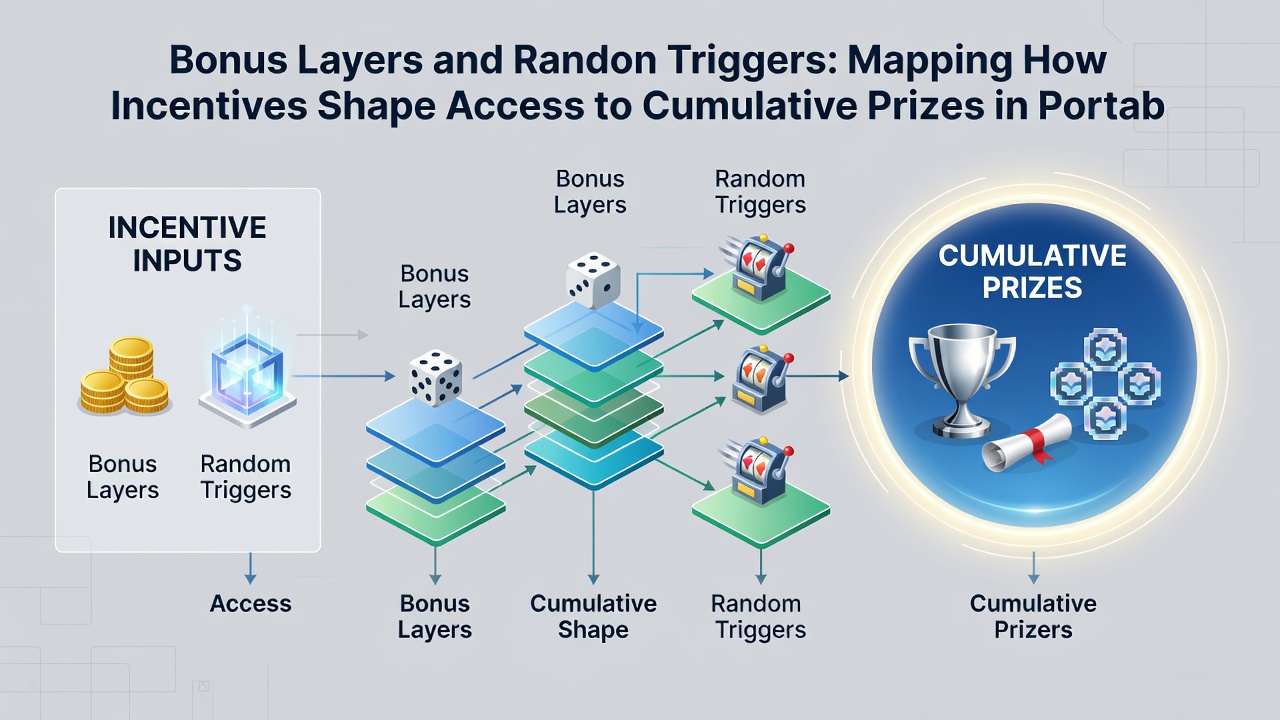
Portable reel designs incorporate multiple bonus layers that stack incentives across base gameplay and feature rounds while random triggers determine when players gain entry to accumulating prize pools. These mechanics operate through algorithms that assign values to symbols and events based on predefined probabilities, allowing cumulative prizes to build from repeated activations rather than single spins.
Designers structure bonus layers so each successive level adds multipliers, additional reels, or expanded symbol sets that feed into a shared prize meter. Random triggers activate these layers at intervals calculated by the game's random number generator, which processes inputs from player actions and internal timers to select outcomes. Data from industry analyses indicate that such systems appear in over 60 percent of mobile slot titles released between 2024 and 2026, with cumulative prize access tied directly to how frequently layers activate during sessions.
Layer Construction and Prize Accumulation Pathways
Each bonus layer functions as a distinct module that contributes to a central prize counter, where values increase through incremental additions from every qualifying spin. Base layers typically award small fixed amounts or free spin bundles, while deeper layers introduce progressive elements that draw from a percentage of total wagers placed across connected devices. Observers note that this modular approach lets developers adjust incentive density without altering the core reel matrix, maintaining consistent return-to-player percentages while varying access frequency to larger rewards.
Random triggers serve as gatekeepers that unlock progression between layers. These triggers rely on weighted probability tables that assign higher chances to lower-value events and lower chances to high-value cumulative prizes. Research from the University of Nevada's gaming studies program shows that trigger rates for mid-tier layers often range between 1 in 150 and 1 in 300 spins, whereas top-tier access events occur at rates closer to 1 in 2,500 spins in many portable titles.
Integration of Incentives Across Mobile Platforms
Mobile interfaces embed these layers within touch-responsive controls that display accumulating meters in real time, allowing users to track progress toward cumulative prizes during short play sessions. Incentives such as expanding wilds or symbol collectors activate randomly and route portions of their value into the shared pool, creating a feedback loop where repeated engagement increases both individual rewards and overall prize totals. Figures from the Nevada Gaming Control Board reveal that mobile progressive systems accounted for 42 percent of total slot revenue in regulated markets during the first quarter of 2026, underscoring the role layered incentives play in sustaining player activity.
Design variations appear across different software providers, yet the underlying mapping remains consistent: each incentive type maps to a specific trigger condition that either advances the player one layer or deposits value directly into the cumulative meter. This mapping ensures that short bursts of play on portable devices can still contribute meaningfully to larger prize pools without requiring extended time commitments.
Regulatory and Technical Considerations in June 2026
By June 2026, several jurisdictions outside the United Kingdom had updated technical standards requiring clearer disclosure of trigger probabilities within game help screens. These updates followed reports from the Australian Communications and Media Authority that documented player confusion over how layered bonuses feed into progressive totals. Updated guidelines emphasize that random trigger documentation must list both base probabilities and any modifiers introduced by active incentives, enabling users to understand access pathways without ambiguity.
Technical implementations now include server-side verification of trigger fairness across distributed mobile networks, reducing discrepancies that once arose from device-specific processing delays. Industry reports from the Canadian Gaming Association highlight that standardized testing protocols implemented in early 2026 reduced variance complaints by 28 percent in participating provinces, demonstrating measurable effects of transparent layer mapping on operational stability.
Case Examples of Incentive Mapping
One widely deployed portable title released in late 2025 uses a three-layer system where the first layer grants symbol upgrades, the second adds a multiplier ladder, and the third opens a separate reel set linked to the cumulative prize. Random triggers occur through a combination of scatter symbol counts and a background timer that resets after each activation, ensuring that incentive distribution remains independent of total spin volume. Similar structures appear in titles from multiple providers, each adapting the same core mapping to different thematic elements while preserving the relationship between layers and prize accumulation.
Another example involves collector mechanics that gather tokens during base play, with random triggers converting collected tokens into entries toward higher prize tiers. Data released by the New Jersey Division of Gaming Enforcement in May 2026 indicated that titles employing token-to-tier conversions generated 19 percent higher average session lengths compared with single-layer designs in the same market segment.
Conclusion
Bonus layers combined with random triggers create structured pathways that govern how incentives translate into cumulative prize access within portable reel designs. These systems rely on probability tables, modular feature sets, and real-time meter updates to maintain consistent prize growth across mobile sessions. Technical standards updated through mid-2026 continue to refine disclosure requirements and verification methods, supporting transparent operation of layered incentive models across regulated markets.